

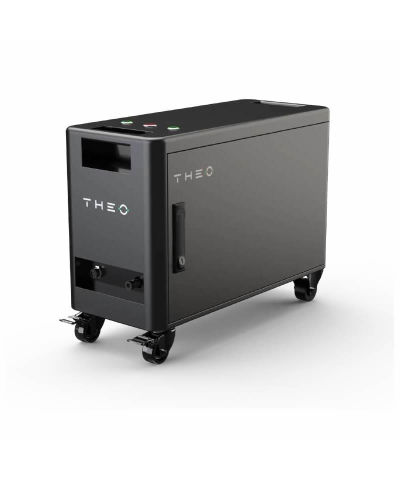
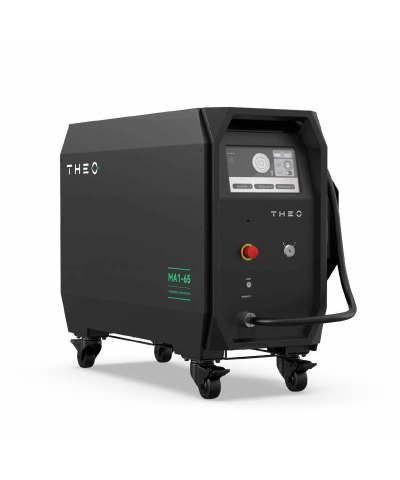
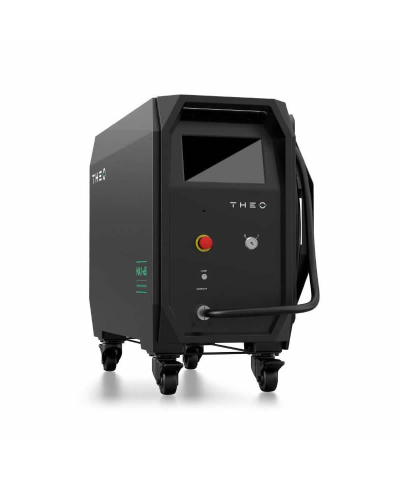
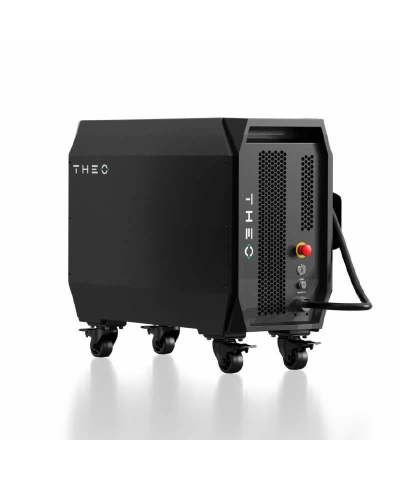
Discover the latest laser welding machines from leading brands including Theo Max Photonics. As one of the fastest-growing technologies in modern fabrication, laser welding is transforming manufacturing with exceptional speed, precision and productivity.
From viral social media demonstrations to real-world industrial applications, laser welding technology is now widely available for businesses looking to improve weld quality, reduce labour costs and increase production efficiency.
What is Laser Welding?
Laser welding is an advanced welding process that uses a concentrated beam of light to join metals together. The term LASER stands for Light Amplification by Stimulated Emission of Radiation. When the laser beam is focused onto the joint between two materials, intense heat is generated, melting and fusing the metal edges together.
Unlike traditional welding methods such as MIG, TIG or MMA welding, laser welding uses a highly focused heat source to create accurate, clean and consistent welds with minimal distortion.
How Fibre Laser Welding Works
Modern fibre laser welding machines use optical fibres to generate and amplify laser light. Pump laser diodes create raw light energy, which is then intensified through specially doped optical fibres containing rare earth elements. This process creates a powerful and highly controllable laser beam capable of delivering precise welds across a range of materials.
Compared to older laser technologies, fibre laser welding systems offer:
- Greater energy efficiency
- Improved weld quality
- Enhanced safety features
- Higher power output
- Reduced maintenance requirements
Fibre laser welding is ideal for industries requiring speed, repeatability and precision manufacturing.
Laser Welding With or Without Filler Wire
One of the major advantages of laser welding machines is their flexibility.
Autogenous Laser Welding
For tight-fitting joints with minimal gaps, laser welding can be completed without filler material. The laser beam melts the parent materials directly, creating a strong seam weld. This process, known as autogenous welding, is particularly useful for precision fabrication and thin materials.
Laser Welding With Filler Wire
Where gaps exist between materials, filler wire can be introduced to improve weld strength, appearance and mechanical properties. Many fibre laser welders feature integrated wire feed systems that operate similarly to cold wire TIG welding.
Benefits of filler wire in laser welding include:
- Improved weld profile
- Reduced risk of cracking
- Enhanced mechanical performance
- Better gap bridging capability
Benefits of Laser Welding
Although the initial investment in a laser welding machine can be higher than conventional welding equipment, the long-term productivity gains often provide a rapid return on investment.
Faster Welding Speeds
Laser welding can be up to four times faster than traditional MIG or TIG welding processes, significantly increasing throughput and reducing production times.
Reduced Heat Input
The concentrated laser beam creates a smaller heat affected zone (HAZ), helping reduce material distortion and improving dimensional accuracy.
High Precision Welding
Laser welding is ideal for thin materials, small components and precision engineering applications thanks to its pinpoint accuracy and excellent control.
Lower Labour Costs
Compared to TIG welding, laser welding systems require less operator skill and shorter training times, helping businesses reduce labour costs.
Reduced Welding Fume
Laser welding typically generates less fume than conventional arc welding processes, improving workshop conditions when combined with appropriate extraction systems.
Minimal Distortion
Lower heat input means reduced warping and less post-weld correction work, especially when working with stainless steel, aluminium and sheet metal.
Laser Welding Safety Considerations
As with any industrial welding process, proper safety measures are essential when using laser welding equipment.
Laser Radiation
Laser welding produces both visible and invisible radiation that can damage skin and eyesight. Reflected laser light can also create hazards throughout the working environment.
Welding Fumes
Laser welding can generate hazardous metal fumes and vapours. Effective local exhaust ventilation and suitable respiratory protection should always be used.
Eye Protection
Correct laser safety eyewear designed for the appropriate wavelength is essential when operating or observing laser welding processes.
Fire Risks
The concentrated heat produced during laser welding can ignite combustible materials. Work areas should always be kept clear of flammable substances.
Laser Enclosures
Many industrial laser welding systems are operated within Class 4 laser safety enclosures or dedicated laser welding rooms to protect operators and nearby personnel.
Understanding Laser Welding Terminology
Wobble Welding
Many laser welding machines include a wobble function, which moves the laser beam in a controlled pattern to widen the weld area. Wobble welding is especially effective for reflective materials such as aluminium and copper and can help bridge gaps between components.
Wobble Frequency
Wobble frequency refers to the speed of beam oscillation. Adjusting wobble frequency changes heat input, penetration depth and weld characteristics, allowing operators to optimise weld performance for different materials and applications.
Why Businesses Are Investing in Laser Welding
As manufacturing demands continue to increase, businesses are turning to laser welding technology to improve efficiency, consistency and production capacity.
Key industries benefiting from laser welding include:
- Automotive manufacturing
- Aerospace engineering
- Stainless steel fabrication
- Sheet metal production
- Electronics manufacturing
- Precision engineering
The combination of speed, accuracy and reduced finishing requirements makes laser welding one of the most efficient welding solutions available today.
Professional Laser Welding Support
Our range of laser welding machines is supplied through trusted industry partners with extensive technical support, training and aftersales service. From machine demonstrations and installation support to maintenance and spare parts availability, businesses can invest in laser welding equipment with confidence.
If you are considering upgrading to a laser welding system, contact us to discuss demonstrations, technical specifications or application testing for your production requirements.
FAQs
Laser welding is a welding process that uses a highly concentrated laser beam to melt and fuse materials together. It is commonly used for precision metal joining applications due to its speed, accuracy and low heat distortion.
Laser welding works by directing a focused beam of light onto the joint between two materials. The intense heat generated by the laser melts the metal edges, creating a strong and precise weld as the material cools and solidifies.
Laser welding can be used on a wide range of metals including stainless steel, mild steel, aluminium, copper, titanium and galvanised steel. The suitability depends on material thickness and the specific laser welding machine being used.
Laser welding can produce extremely strong and consistent welds with less heat distortion than TIG welding. In many applications, laser welds can match or exceed the strength of traditional welding methods when performed correctly.
The main benefits of laser welding include faster welding speeds, high precision, reduced heat affected zones, lower distortion, minimal post-weld finishing and improved productivity compared to traditional welding processes.
Yes. Laser welding can be performed without filler wire in applications where the joint fit-up is tight and there is little or no gap between the materials. This process is known as autogenous welding.
Laser welding is safe when the correct precautions are followed. Operators should use appropriate laser safety eyewear, fume extraction systems and protective enclosures to minimise exposure to laser radiation and welding fumes.
Laser welding is widely used in industries such as automotive manufacturing, aerospace, sheet metal fabrication, electronics, medical device production and precision engineering.
Laser welding can be up to four times faster than conventional MIG or TIG welding processes, depending on the application, material and thickness being welded.
Although laser welding is generally easier to learn than TIG welding, operators should still receive proper training on machine operation, safety procedures and welding parameters to achieve the best results.